


Coating thickness measurement
January 31, 2023
Coating thickness measurement on production line is a process to determine the thickness of a coating applied to a substrate. It is done to ensure that the coating is consistent, uniform and within specified thickness limits. The most common methods for coating thickness measurement are:
- Non-destructive techniques:
- Magnetic induction
- Eddy current
- Destructive techniques:
- Blade or abrasive cutting
- Microscopy/profilometry
The choice of method depends on the material of the substrate, type of coating and accuracy required. The data collected can be used for quality control and process optimization.
Coating thickness measurement with X-rays involves the use of X-ray fluorescence (XRF) spectroscopy. In this method, X-rays are directed onto the coating and substrate, and the X-rays that are emitted from the sample are analyzed to determine the composition and thickness of the coating. The principle behind XRF is that the energy of the X-rays that are emitted from the sample is related to the thickness and composition of the coating. The energy of the X-rays is measured and used to calculate the thickness of the coating. XRF is a non-destructive method of coating thickness measurement and is suitable for a wide range of coatings, including metals and ceramics. It is often used in production lines to ensure that coatings are within specified thickness limits.
Plastic coating thickness measurement is the process of determining the thickness of a plastic coating applied to a substrate. The thickness of plastic coatings is important for ensuring product quality and consistency, as well as for optimizing the production process.
The choice of method depends on the material of the substrate, type of coating, and accuracy required. Ultrasonic thickness measurement and optical interference are popular non-destructive methods for measuring plastic coatings, while microscopy and cutting are commonly used destructive methods. Data collected from these measurements can be used for quality control, process optimization, and failure analysis.
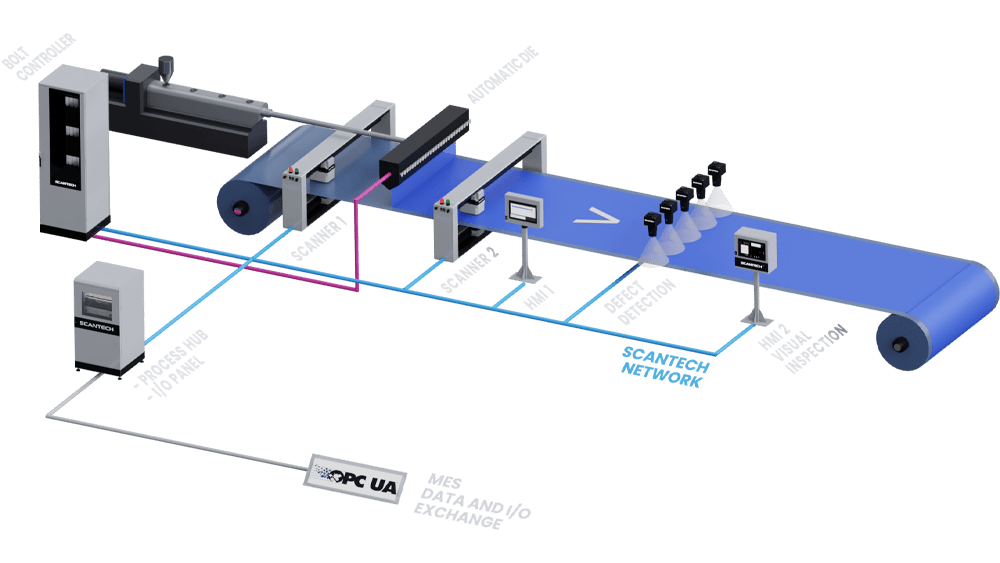
Coating thickness measurement on production line is a process to determine the thickness of a coating applied to a substrate.

"
Discover our measurement solutions for the COATING manufacturing process.
Related Articles
Solutions for Battery
Battery production is a complex process that involves a variety of steps, from electrode coating and calendaring to slitting and assembly.
Battery Solution Measurement on Production Line
Learn how battery solution measurement on production line can ensure the quality and performance of your energy storage solutions.
Battery Solution Manufacturing – Powering the World with Reliable Energy Storage
Discover the benefits of battery solution manufacturing for your production line. How battery solutions are transforming battery production.